
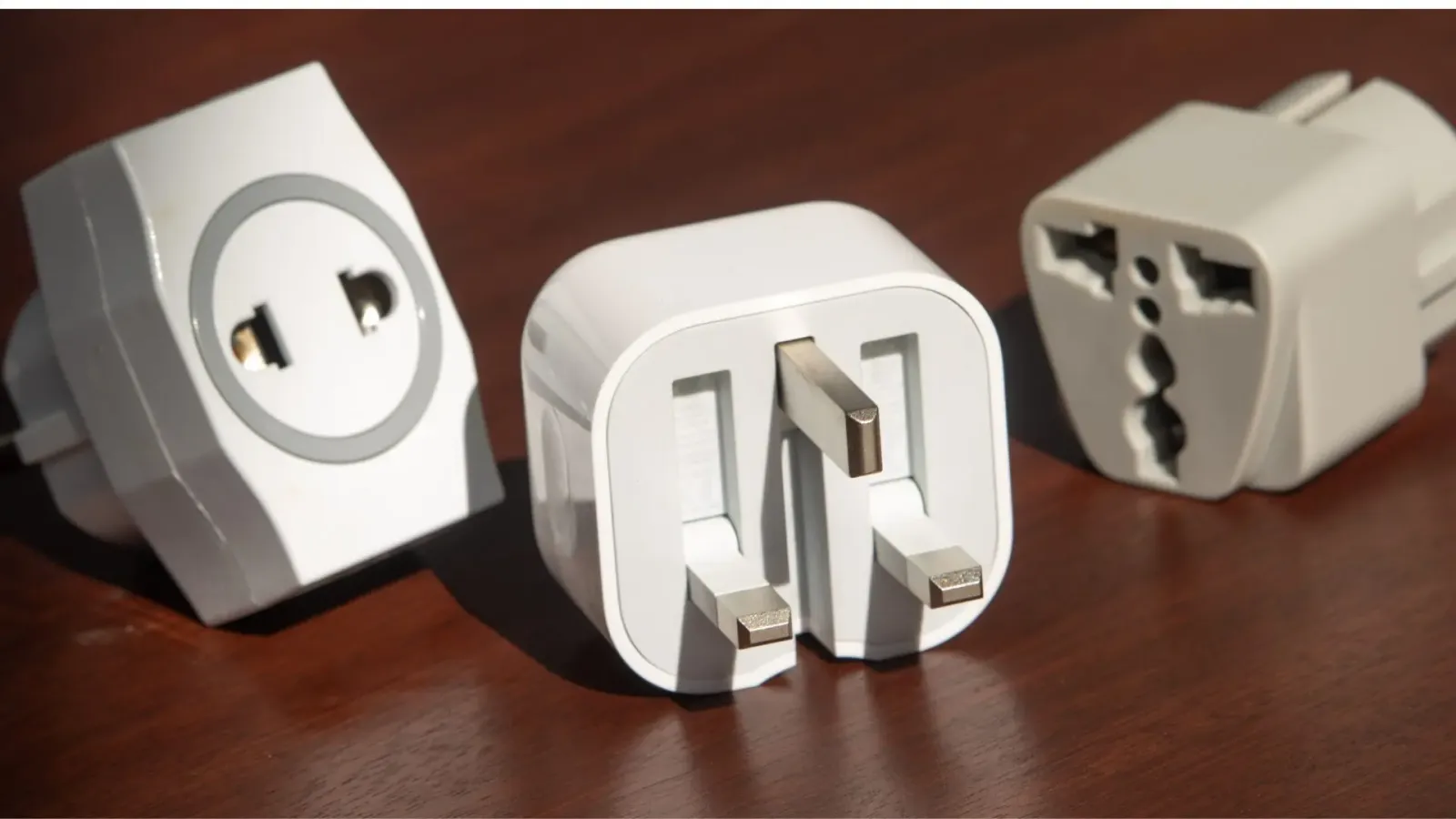
Answer: Here is the good thing—at most places in Thailand, you will find hybrid (also called universal) sockets where both flat-prong and round-prong plugs can be used simultaneously. In older buildings, there are usually only two-prong sockets.
You may need an adapter that fits types A, B, C, F, O, and G. So, the best option is a “Universal Travel Adapter”, like those from Epicka or Newvanga, that supports all types. It’s even better if it has built-in fuses and multiple USB ports.
Plug Types
Type C

We all know that the most common is the Type C plug, which has two round pins. It is quite common in Europe and Asia and fits in Thai sockets.
Type A & B

Type A or B plugs have two or three flat parallel pins. They are most common in the USA, Canada, and Japan. Most of the time, you don’t need an adapter for these in Thailand.
Type O

Type O is less common internationally. It has three round pins but is the official Thai standard and is also compatible with Type C plugs.
Type G (and Type I)

Type G has three rectangular pins and is mostly used in the UK, Singapore, and Malaysia. An adapter is required for this type, and also for Type I (angled pins).
Voltage & Frequency
Everywhere in Thailand operates on a standard of 230V supply and 50 Hz frequency.
Tip
If you forget to bring an adapter, no need to worry—it is easily available at 7-Eleven stores, market shops, and mega malls across Thailand.
Frequently Asked Questions
Do I need a plug adapter for Thailand?
It depends on your plug type. Most Type A, B, and C plugs work without an adapter, but others (like Type G or I) will need one.
Can I use US plugs in Thailand?
Yes, most US plugs (Type A and B) work in Thai sockets without an adapter in many places.
Is voltage in Thailand safe for my devices?
Thailand uses 230V. If your device supports 110–240V (like most modern chargers), you’re fine. Otherwise, you’ll need a voltage converter.
Are universal adapters worth it?
Yes, they are the best option if you travel frequently, as they support multiple plug types and often include USB ports.
Where can I buy a plug adapter in Thailand?
You can easily find them at 7-Eleven, electronics shops, markets, and shopping malls.
Final Verdict
So, what plug adapter do you need in Thailand? The simple answer is: you may not need one at all if you use Type A, B, or C plugs, thanks to the widely available universal sockets. However, to stay fully prepared, it’s best to carry a universal travel adapter—especially if you use Type G or other less compatible plugs.
Being prepared ensures you won’t have to hunt for adapters right after landing, and you can charge your devices stress-free.

Zach Cameron & Zahid Karim
Travel Analyst | 11+ years experience











Community Insights
Join the conversation
Login or create an account to share your thoughts and react to comments.